graphic artist
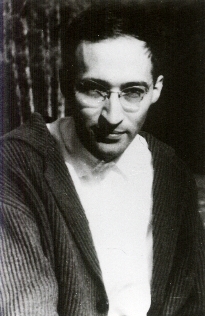
Józef Gielniak was born to Polish migrant workers living in France. His mother, Anna (née Tejsar), came from a family of farm laborers in Galicia and moved to France in 1922 to work in agriculture. There, she met Stanisław Gielniak, who came from the Greater Poland region. They married and settled in Denain, in northern France, where they had two sons: Kazimierz, born in 1924, and the younger Józef. In 1933, their father abandoned the family. Anna later remarried Jakub Dziedzic, who eventually provided a stable and caring home for her sons.
Between 1945 and 1948, Gielniak attended secondary school in Anzin. Artistically gifted, he also took classes at the École des Beaux-Arts in Valenciennes in 1945, but had to discontinue his studies due to financial difficulties. In 1948, he was awarded first prize for drawing and watercolor by UFOLEA (Union Française des Œuvres Laïques d’Éducation Artistique). After completing school, the mayor of Anzin offered him a scholarship to study at the Academy of Fine Arts in Paris. He declined the offer, choosing instead to accept a proposal from Polish diaspora activists to pursue consular and diplomatic studies in Poland, on the condition that he first learn Polish. To this end, he enrolled in a Polish high school in Paris in the autumn of 1947, but remained there for only three months.In 1949, he contracted tuberculosis and was treated at a sanatorium in Neufmoutiers-en-Brie. Despite his illness, he passed his final exams. In 1950, he returned to Poland with his family, settling in Grudziądz on Forteczna Street.
His health condition prevented him from taking up studies. He was hospitalized in Grudziądz and later in Bydgoszcz. In 1953, he was sent for treatment to the “Bukowiec” sanatorium in Kowary.
On May 2, 1956, he was officially discharged as a patient, although his illness made it impossible for him to leave the sanatorium. He was provided with staff apartament there and began working as a medical statistician. That same year, he married Daniela née Mańke (whom he affectionately called Grażynka), a former patient and employee of the sanatorium. Their only son, Józef, was born on January 10, 1957.
Despite his illness, Gielniak appealed to the Ministry of Culture for permission to pursue an individual course of study. In early 1956, he came into contact with Professor Stanisław Dawski, rector of the School of Fine Arts in Wrocław, who became his mentor and encouraged him to focus on printmaking — specifically linocut. Within just a few months, Gielniak began producing mature works, and in less than two years, his artistic style had fully developed.
He made his exhibition debut in December 1956, and in 1958, he was admitted to the Association of Polish Artists and Designers (ZPAP) thanks to his work. From then on, he exhibited at all major contemporary graphic art festivals in Poland and abroad. His most important solo exhibitions were held in Wrocław (1961, 1968), Jelenia Góra (1962), Vienna (1963), and Gdańsk (1970). After receiving first prize at the 2nd National Exhibition of Graphic Art and Drawing in Warsaw in 1959, he went on to win awards and distinctions almost every year. In 1964, he received the State Prize, and in 1968, he was awarded the Knight’s Cross of the Order of Polonia Restituta.
Severely ill, Gielniak practically never left the sanatorium. A significant event was his one-and-only, several-hour long visit to Wrocław, where he attended the opening of a major retrospective exhibition organized by the Silesian Museum (now the National Museum). His primary means of staying in touch with friends was through letters, which served as a substitute for conversation. Today, they remain a valuable source of insight into his life and work, as well as compelling literary texts in their own right.
Among his close friends were Professor Stanisław Dawski, Henryk Płóciennik, Ignacy Witz, Jerzy Panek, Wojciech Siemion, Jacek Gaj, and Irena and Andrzej Jakimowicz.
Gielniak’s prints can also be understood as a form of correspondence — a visual expression of deeply personal experiences and emotions. For this reason, they resist easy comparison with established artistic traditions. Many works were addressed to specific individuals, as evidenced by their dedications. In a letter to W. Śmigielski, he wrote:
“…treat my carving as a kind of wordless letter addressed to a close friend…” [1]
In a letter to Ignacy Witz, he remarked:
“The print is the most essential message for those closest to me. Such a message — ‘Improvisation for Grażynka VII’ — I am sending you; perhaps it expresses better what I would like to say in my clumsy and inadequate words…” [2]
His finely cut linocuts, composed of delicate lines and dots, often resemble prints created using metal techniques. Linocut was, in fact, the only medium he could practice given his physical condition. As he wrote in one of his first letters to Ignacy Witz in 1959:
“I work in linoleum not out of choice, but simply because I have no other option. Sometimes I dream of pure technique — of etching… but that will remain only a dream. I don't paint because the results are poor, so it's a waste of time — and so I'm left with linocut, a technique unfortunately despised and doomed to failure.” [3]
In just fifteen years of artistic activity, he created 53 graphic works, most of them arranged in series, including Sanatoria (1958–1967), Improvisations (1958–1959), and Improvisations for Grażynka (1965–1971). He also produced 16 bookplates.
Józef Gielniak died of a heart attack on May 28, 1972. He was buried in the old cemetery in Kowary.
His work received critical attention early on. Following an enthusiastic review by Ignacy Witz at the 2nd National Exhibition of Graphic Art and Drawing at Warsaw’s Zachęta Gallery in 1959, his works consistently attracted interest. In 1963, a monograph on the artist by Andrzej Jakimowicz was published as part of the Contemporary Polish Graphic Art series. Another important publication for those interested in Gielniak’s work is the book by Mariusz Hermansdorfer, released in 1975, which includes both an in-depth analysis of his work and a chronology with selected critical commentary.
Three films have been made about Gielniak and his work: Azyl (dir. Grzegorz Lasota, 1965, Polish Television), a film by Jean-Marie Drot (1966, French Television), and a documentary by Elżbieta Sitek (1974, Polish Television).
His works are held in numerous collections, including the Karkonosze Museum in Jelenia Góra (which houses a complete set of his works, most of his linocut plates, book collection, calendars, and memorabilia), as well as the National Museums in Wrocław, Warsaw, and Kraków, the National Library in Warsaw, and the National Ossolinski Institute in Wrocław.
- Grzybkowska Teresa. Józef Gielniak (1932–1972). In: Z dziejów sztuki śląskiej (ed.) Zygmunt Świechowski. Warsaw 1978. p. 471 - 491
- Hermansdorfer Mariusz. Józef Gielniak. Wrocław–Warsaw–Kraków 1972.
- id. Józef Gielniak. Wrocław, 1975.
- Jakimowicz Andrzej. Józef Gielniak. Warsaw 1963.
- Jakimowicz Andrzej. Józef Gielniak. Warsaw 1963.
- Kułakowska, Katarzyna. Józef Gielniak, grafik w Karkonoszach. In: Wspaniały krajobraz. Artyści i kolonie artystyczne w Karkonoszach w XX wieku. Berlin-Jelenia Góra 1999. ISBN 83907423-3-0 p. 312-316
- Panek, Gielniak : życie, przyjaźń, sztuka : korespondencja 1962-1972. - ed. Elżbieta Dzikowska, Wiesława Wierzchowska. Warszawa 2005. ISBN 83-7009-588-7
- Radliński Jerzy. Obywatel jazz. Warsaw 1967. p. 225-231.
- Stajuda Jerzy. O obrazach i innych takich. Warsaw 2000. ISBN 83-87321-37-0
- Szymczak Henryk. Sztuka moje życie Józefa Gielniaka listy do przyjaciół. Jelenia Góra 1982.
[2]ibid. p. 86
[3]ibid. p.15