Film director
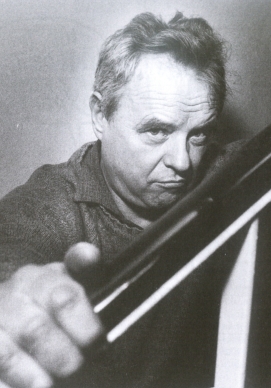
Between 1947 and 1949, he lived in Jelenia Góra, where his father ran a sausage-making business until 1948, after which he worked at the State Meat Industry Plants. The future director began keeping a diary while in Jelenia Góra, which he later drew upon in his creative work. He graduated from the State Secondary School and General Lyceum named after Żeromski in 1949. In 1954, he completed his studies in directing at the National Film School in Łódź and began working as an assistant director. He often appeared as an actor in minor roles. A comedy specialist, beloved by audiences but disliked by the authorities and critics. Initially, he directed rather formulaic musical and social comedies; starting in the early 1970s, thanks to his collaboration with Jacek Fedorowicz and Stanisław Tym, he began portraying the absurdities of life under socialism and human pettiness with increasing sharpness (and humor). He was involved in opposition activities, contributing actively (he once smuggled an illegal printing press into the country in his own small Fiat) and through his films. He suffered greatly from battles with censorship, which mercilessly cut some of the best scenes and gags—but what remained was enough for him to gain cult status after his death. He referenced Jelenia Góra in his films: in a dialogue from Teddy Bear (Miś), the title character tells a butcher shop owner in London, “I brought you a rock from Jelenia Góra,” quickly correcting himself— “Of course, from Jasna Góra.” In the early 1970s, he co-wrote a spy comedy screenplay with Jacek Fedorowicz titled Three to Beat (Trójka do bicia), which was supposed to be set around Jelenia Góra—but the film was never made.
Films
Episode titles:
- The Polite Killer
- The Third Hand
- The Thermos
- The Blackmailer
- Sleeping Doesn’t Lie
- Number 2968
- The Plaster Figurine
- The Quiet Little Room
- 1966: A Marriage of Convenience
- 1968: An Adventure with a Song
- 1970: Frog in Cream [unfinished]
- 1972: Man-Woman Wanted
- 1974: There’s No Rose Without Fire
- 1975: Unusually Calm Man [TV film]
- 1976: The Brunet Evening Visitor
- 1978: What Will You Do When You Catch Me?
- 1980: Teddy Bear
- 1981/83: Alternatives 4 – TV series
- 1986: The Substitutes – TV series

Today, his films hold cult status, and he has even been honoured with a comedy film festival bearing his name in Jelenia Góra. Yet throughout his life, he faced resistance from the authorities, critics, and fellow filmmakers, who often looked down on—and envied—the box office success of films like “Marriage of Convenience” and “Teddy Bear.”
Stanisław Bareja – The Chronicler
The son of a Warsaw butcher, he wandered briefly around Poland after the war before ending up at the Łódź Film School. He must have had quite a strong character, as he was one of the few students who never joined the Union of Polish Youth (ZMP). Most members joined just to keep the peace, treating ZMP membership as a kind of ritual that had to be fulfilled to avoid standing out from the crowd. Bareja had the strength and courage not to conform—neither to that ideology nor, as his life would show, to any other.
He made his debut during a difficult period, in 1960. The “Polish Film School” was fading out, and the censorship that had loosened briefly after October 1956 was once again in full force. At the same time, after the lean years of the 1950s, a number of intriguing Western films began to appear on Polish screens, and domestic productions tried to compete. Against this backdrop, Bareja’s debut film, “Husband of His Wife,” doesn’t look as bad today as it was received at the time. The story of a talented composer rebelling against a society that only recognises his wife’s sports achievements was on par with, if not better than, the French or English comedies that were drawing crowds. In fact, it may have been better—because Bareja paid close attention to the protagonists’ surroundings: apartments furnished with a strange mix of pre-war sideboards and modern wall units, streets full of hurried pedestrians, and the few cars in sight. Already in this film, his creative method began to take shape: a loosely structured plot filled with numerous, often disruptive, digressions. He employed this method again in the only “serious” film of his career, the crime drama “A Touch of the Night.” On the surface, it’s a conventionally told and rather dull story about a robbery and murder investigation. We know the perpetrator, so the only question is when the efficient and brave militia officers will catch the criminal. But more important than the investigation is the portrayal of a small town where everyone knows everyone, everybody knows everything about everyone else, and boredom reigns supreme. Suddenly—excitement: a robbery, the militia, an investigation. Finally, something is happening! In subtle gestures and observations of the behaviour of this human anthill, Bareja managed to capture the growing lethargy of the Gomułka-era “stability”—a time marked by stagnation and discouragement. The commercial success of this film led, a few years later, to what was arguably the biggest failure of his career: the TV series “Captain Sowa on the Trail.” The same actor (Wiesław Gołas), now confined to television sets, seemed unsure of how to play his role, resorting to monotonous stories about how he solved yet another criminal case. While each episode required 30 minutes of screen time, most viewers figured things out within five. The show lacked imagination—and the budget to take the story out of the studio and onto the streets among the people.
In his desire to break free from the greyness of the 1960s, Bareja created three films that brought colour, music, and a whiff of the wider world to Polish cinema. “In A Wife for an Australian” and “Marriage of Convenience,” romantic entanglements served as the narrative excuse; in “An Adventure with a Song,” it was the adventures of a singer trying to make it in mythical Paris. Popular actors, catchy songs, witty dialogue. And something new emerged in these films: secondary characters who always knew how to “get things done.” This is especially evident in Marriage of Convenience, where the character played by Bogumił Kobiela—“the engineer”—manages to handle almost any situation: an apartment that “belongs to a friend,” a title that’s “just what people call me,” and a wife who “isn’t really my wife.” Using makeshift methods and an old spinning wheel, he supplies Warsaw’s black-market clothing stalls with goods that state-run, socialist factories can’t produce. For the first time, Bareja depicted one of the absurdities of his era—the gap between official state declarations and the rational behaviour of ordinary people. The parents of the film’s heroine (played by Elżbieta Czyżewska) behave perfectly rationally when they explain to her fiancé (Daniel Olbrychski) that thanks to the constant resale of his paintings, they’ll be able to legalise the income from their market stall. In this film, Bareja took his first step away from conventional literary comedy toward biting, real-life satire. A change in screenwriting partners also contributed: Jerzy Jurandot was replaced by Jacek Fedorowicz, and a few years later by Stanisław Tym.
“Man-Woman Wanted: The Career of Stanisław Maria R.,” as the subtitle suggests, is the story of an art historian who, while hiding as a woman in disguise from theft charges, discovers that he can earn much more working as a housekeeper. For the first time in Bareja’s work, the place of the classic story is taken by digression and socio-cultural observations, which are more important than treated under the pretext intrigue. The plot idea was used to explore various social environments, including those that Polish cinema had previously avoided showing. So, we have here a moonshiner who officially examines “sugar content in sugar” but we also have an official whose wife proudly declares, “My husband is a director.” The character of the director, played by Jerzy Dobrowolski, perhaps most fully captured what Bareja intended to show—the rising chutzpah and rapacity of the authorities of Gierek’s era. The director knows nothing, hops from one position to another, and takes no responsibility. He signs nothing (except his bonus for a rationalisation proposal—to move high-rise blocks to a pond), and he creates nothing—he simply exists. And governs. Thanks to people like this director, a housekeeper earns more than a skilled worker and lives in an attic, waiting for years for a flat allocation.
Flats, toilet paper, and bottles exchange—three problems that socialism could not handle. The complicated manoeuvres and machinations one had to do to become a lucky tenant (not owner) of a flat in “A Jungle Book of Regulations” are impossible to describe. An application, a stamp, a favour—and the magic word: “connections.” It was necessary to have “connections” to someone who knew someone who had “connection” to someone… While in “Man-Woman Wanted” the humour was from relatively rare situations, the housing shortage was a common problem. It’s not a surprise, then, after the premiere of A Jungle Book of Regulations, critics poured scorn on the director. The film was attacked for what made it valuable—the lack of a traditional plot, its division into episodes, and its digression. Bareja couldn’t be accused of making films for nobody because cinemas were full—so it was written about flattering low tastes and producing films play “to the gallery.” For a while, it was better for him to disappear from the authorities’ sight. Bareja made for television a more “normal” comedy about a search in an army the father of an illegitimate child (“Incredibly Peaceful Man”). It had a plot, jokes, humour, and no satire.
But the satire excessively appeared in Bareja’s next films. “The Brunet Evening Visitor,” “What Will You Do If You Catch Me?” and “Teddy Bear” form a trilogy about Polish reality in the second half of the 1970s. They made people laugh then—and they still do today. Back then, we laughed at the accuracy of observations, at the sharp eye that could capture the absurdity and ridiculousness of the reality that we had to live in. The situations that were taken from life were: getting a brake cable for a “Syrenka” car (“The Brunet…”), retirees earning extra money by standing in queues at a butcher shop (“What Will You Do…”), or the declaiming sequacious tributes aimed at omnipotent chairmen’s (“Teddy Bear”). Bareja’s films allowed work omnipresent filth, rudeness, drunkenness, and lawlessness off. Bareja had no illusions—no one was free from these inadequacies in his films. The so-called “simple man” was equally guilty for the state of reality because they accepted this order and, at best, tried to find a place for themselves. Only the old carter at the end of “Teddy Bear” reminds us of what the word traditions truly means. But even at him fell from the sky proudly flying over Warsaw straw dummy bits.
“Teddy Bear” waited two years for its premiere and reached the cinema thanks to “August 1980.” During that time, Bareja was working on the magnum opus of his career—the TV series “Alternatives 4.” Production was finished during martial law, and after the first screening for the censors, the creators were told to cut practically everything. When it finally aired in 1986, several lines of dialogue had been changed, and some scenes were ordered to be removed. And yet, the collective portrait of the residents of a Warsaw block of flats in Ursynów was both hilarious and disturbing. It was hilarious—because it depicted the absurdities of life in that reality, where queues, shortages, scheming, and deception were the norm, and where any natural impulses or behaviour was instantly viewed with suspicion. It was disturbing—because it showed how easily people could be manipulated, how willingly they submitted to the authority of a crude caretaker, and how quickly they adapted to their surroundings. Today, the ending of the series can be read as a prophecy: caretaker Stanisław Anioł stopped being a caretaker—he becomes the estate manager. He will be in charge a little longer yet.
Constant battles with censorship took a toll on Bareja’s health. On top of that, he was involved in underground opposition activities (Bareja personally smuggled an illegal printing press into the country in his small Fiat “Maluch”). Although, the series “The Substitutes” was later created, it no longer had the same power as “Alternatives 4.” Friends and acquaintances urged him to take care of himself, but that was something he probably never learned to do. Too many of his ideas and scripts had been blocked from production for him to consider resting. After a long illness, he passed away. Bareja left behind more than just exposed film stock or well-told story—he left behind the truth. The truth about a time, and about the people who had to live through it. Stanisław Bareja’s films grew more important and more fascinating with each passing year.
Waldemar Wilk
Photo Source: Łuczak, Maciej. Teddy Bear: The Story of Stanisław Bareja. Warsaw, 2003.
Bibliography
- (GK). W hołdzie twórcy „Misia”: „Barejada” w Jeleniej Górze. [“In Tribute to the Creator of “Teddy Bear”: “Barejada” in Jelenia Góra”]. Słowo Polskie, 2002, no. 222, p. 11.
- Janicka, Bożena. “Misior.” Kino, 1997, no. 3, pp. 18-19.
- Jaśko, Jacek. W oparach absurdu: przegląd filmów niezależnych i komediowych Barejada 2003. [“In the Haze of Absurd: The Review of Independent Movies and Comedies Barejada 2003”]. Słowo Polskie, 2003, no. 225, supplement, Słowo Jeleniogórskie, p. 8.
- Likowska, Ewa. Głupota pod lupą. [“Stupidity under Scrutiny”]. Przegląd Tygodniowy, 1999, no. 38, pp. 14-15.
- Łuczak, Maciej. Klasyk humoru. [“The Classic of Humour”]. Wprost, 2001, no. 10, pp. 108-109.
- Łuczak, Maciej. Miś czyli rzecz o Stanisławie Barei. [Teddy Bear: The Story of Stanisław Bareja]. Warszawa 2003. ISBN 83-7255-888-4.
- Łuczak, Maciej. Stańczyk polskiego kina. [“Stańczyk of Polish Cinema”]. Tygodnik Powszechny, 1998, no. 16, p.4.
- MIŚ. Najlepszy dostanie Misia: festiwal Barejada w Jeleniej Górze. [“TEDDY BEAR. The Best Will Receive a Teddy Bear: Barejada festival in Jelenia Góra”]. Gazeta Wyborcza, 2004, no. 225, supplement, „Co Jest Grane” [“What’s Going On?], p. 10. MIŚ. Walczą o Misie: Barejada w Jeleniej Górze. [“TEDDY BEAR. They Fight for Teddy Bears: Barejada in Jelenia Góra”]. Gazeta Wyborcza, 2004, no. 222, supplement, „Wrocław”, p. 7.
- Przezdzięk, Konrad. Bajer pana Barei: przez dwa dni tysiące jeleniogórzan obejrzały filmy słynnego reżysera. [“Tall Story of Mr Bareja: For Two Days Thousands of Jelenia Góra Citizens Watched Film by a Famous Director”]. Gazeta Wrocławska, 2002, no. 222, p.9.
- Rybiński, Maciej. Śmieszniejsze od filmu: jak powstawał serial „Alternatywy”. [“Funnier than Film: How the Series “Alternatives” was created”]. Rzeczpospolita, 2002, no. 168, p. A13.
- Staszewski, Wojciech. Pies docenta zjada kiełbasę: Alternatywy 4. [“The Professor’s Dog Eats the Sausage: ‘Alternatives 4’”]. Gazeta Wyborcza, 2002, no. 231, supplement, “Duży Format” no. 500, pp. 27-28, 30, 33.
Translation: Natalia Pławiak & Nikola Szymanowska